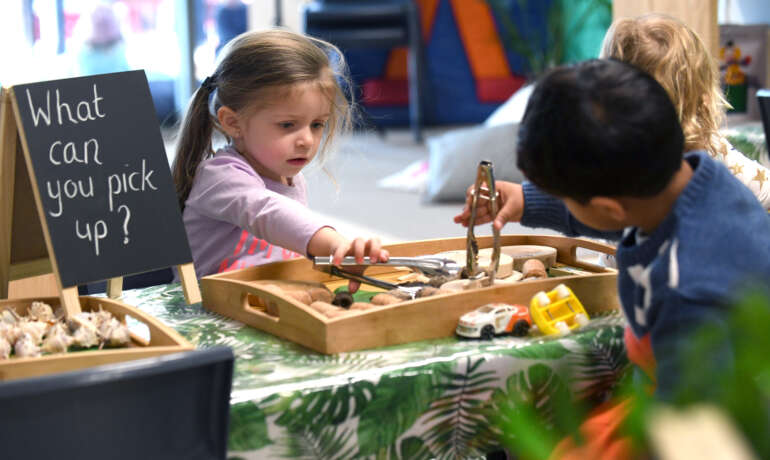

Children’s play is something families see their children do every day. Loose parts play is one example of this, even if the name is unfamiliar. It’s what’s happening when a child is more interested in the box than the toy, or when simple objects turn into something new through imagination and play.
These moments may seem small, but they are essential for progress. Loose parts play supports children’s growth in gentle, everyday ways. It helps children explore the world, make sense of their own thoughts, and learn how to share ideas and connect with others.
What Is Loose Parts Play?
Loose parts play uses everyday materials that children can use in their own way. There’s no set outcome, no rules to follow, and no “right” way to play. You might see children interact with:
- Sticks, stones, shells, or leaves
- Boxes, fabric, or household items
- Objects that can be moved, stacked, or sorted
Often, it’s the simplest materials that hold a child’s attention the longest.
Because children decide how to use the materials, play can look different each time. This flexibility supports thinking, creativity, and understanding. .Children try ideas, explore possibilities, and develop knowledge through hands-on play.
Open-Ended Play vs Structured Activities
Loose parts play is open-ended, meaning children can explore without a set goal. Structured activities usually have one expected result. For example:
- A puzzle has only one correct way to finish
- Drawing something “the right way” can feel frustrating
Open-ended play typically allows children to explore without pressure or concern about being right or wrong. This helps children feel more confident and willing to try again. This freedom supports creativity, independence, and emotional self-control.
Why This Type of Play is Important
Open-ended play is specifically important as it supports the way children naturally learn at their own pace. It allows them to follow their interests and learn by doing rather than being shown solutions on what to do.
Loose parts play supports children’s cognitive functions and key skills by encouraging them to explore, plan, and reflect. For parents, this often looks like children becoming deeply absorbed in what they’re doing. They’re curious, and engaged, without needing much direction.
Through this type of play, children are able to:
- Explore the world around them
- Share thoughts, ideas, and emotions
- Practice communication with others
- Feel confident making their own choices
Clear, simple communication and empathy also develop during play. Children learn that being understood (and understanding others) helps them connect and feel secure.
What Children Learn Through Loose Parts Play
Even when play looks simple, a lot of learning is happening. Through loose parts play, children are motivated to:
- Share ideas, ask questions, and have conversations
- Use words, body language, and facial expressions
- Practice eye contact and appropriate tone
- Learn active listening and how to respond to others
- Build thinking skills like memory, focus, and problem solving
- Gain confidence by trying, testing, and having another go
Every child’s play looks a little different, and that’s okay. Each child learns in their own way and at their own pace.
Effective Communication Skills
As they play together, children learn to:
- take turns speaking and listening
- use body language to support what they’re saying
- adjust their tone of voice depending on the situation
- express ideas and feelings clearly
These early communication skills support positive outcomes later in life, including learning, relationships, and success at school and beyond.
Emotional Development
During loose parts and open-ended play, intentional adult interactions support children’s communication development. When educators or parents use open-ended questions, active listening, and language modelling, they encourage children to explain their thinking and engage in meaningful conversations.
As children continue their play with peers, peer communication and collaborative play help strengthen conversational skills such as turn-taking, social language, and expressing ideas clearly.
- Explore their own emotions safely
- Manage frustration and excitement
- Show empathy and understanding
- Keep trying when something doesn’t work
Emotional skills include recognising, expressing, and regulating emotions. These skills form the foundation of self-awareness, mental health, and positive relationships, and their foundations are laid in early childhood.
These experiences help children feel secure, capable, and supported with their own emotions
Thinking, Focus and Problem Solving
This type of play helps children:
- Come up with new ideas
- Change their approach when needed
- Pay attention for longer periods
- Strengthen memory and recall
Imaginative and pretend play also support executive function, including both emotional regulation and cognitive processing. Children learn by doing, experimenting, and reflecting, which leads to deeper understanding.
How Adults Can Support Loose Parts Play
Adults play an important role in supporting loose parts play without directing or controlling it. Helpful ways to support include:
- Offering open-ended materials
- Watching before stepping in
- Asking simple questions like “What are you making?”
- Allowing children time to explore without rushing
Sometimes, the most supportive thing an adult can do is simply be nearby and interested.
Parents are welcome to visit one of our centres and chat with our friendly educators about everyday play ideas they can use at home. You can also find practical ideas and guidance on loose parts play at home on the Raising Children Network website.
Support Learning Through Play
At Kidz Magic, children’s play is at the heart of learning. Our environments are designed to support communication, emotional development, thinking skills, and confident learners.
Our educators guide and support children through play-based learning that respects each child’s interests, abilities, and stage of development.
You can explore our locations to learn more about our approach on learning through play.
As educator Loris Malaguzzi (founder of the Reggio Emilia approach to early childhood education), once said:
“The wider the range of possibilities we offer children, the more intense will be their motivations and the richer their experiences.”
Frequently Asked Questions
How much time should children spend in loose parts play?
There’s no set amount of time. Loose parts play works best when children are given unhurried time to explore and return to ideas over several play sessions.
What if my child doesn’t seem interested at first?
That’s normal. Some children observe before joining in. Leaving materials available and allowing play to happen naturally often leads to engagement over time.
Can loose parts play be done indoors and outdoors?
Yes. Loose parts play works well in both settings. Indoors, children may focus on building or storytelling. Outdoors, natural materials often support movement and physical play.
How do I know when to step in during play?
It’s usually best to watch first. Stepping in is helpful if a child asks for help, becomes unsafe, or seems stuck and needs gentle encouragement.
What if children disagree during loose parts play?
Disagreements are part of learning. They give children opportunities to practice sharing ideas, listening to others, and working through problems together.
Can loose parts play support school readiness?
Yes. Loose parts play supports skills such as focus, communication, problem-solving, and emotional regulation, which all help children transition into more structured learning environments.